In brief
Soil is a living ecosystem shaped by organisms, plants, and land management. This article explores those relationships, how farming has changed, and why questions about soil health extend beyond any single chemical.
For most of human history, people lived in direct relationship with the soil.
Food was grown locally. Crops were seasonal. Humans worked the land with their hands, consumed food directly from living ecosystems, and remained in constant contact with the microbial world beneath their feet.
Today, much of modern life looks very different.
Food is often transported thousands of miles before reaching the plate. Soil degradation affects many regions, although conditions vary from place to place. Industrial farming practices have transformed the way food is grown. And many people rarely touch the Earth at all.
Yet beneath every forest, field, farm, and garden exists one of the most complex living ecosystems on Earth:
The soil microbiome.
And the condition of that ecosystem may influence far more than most people realize.
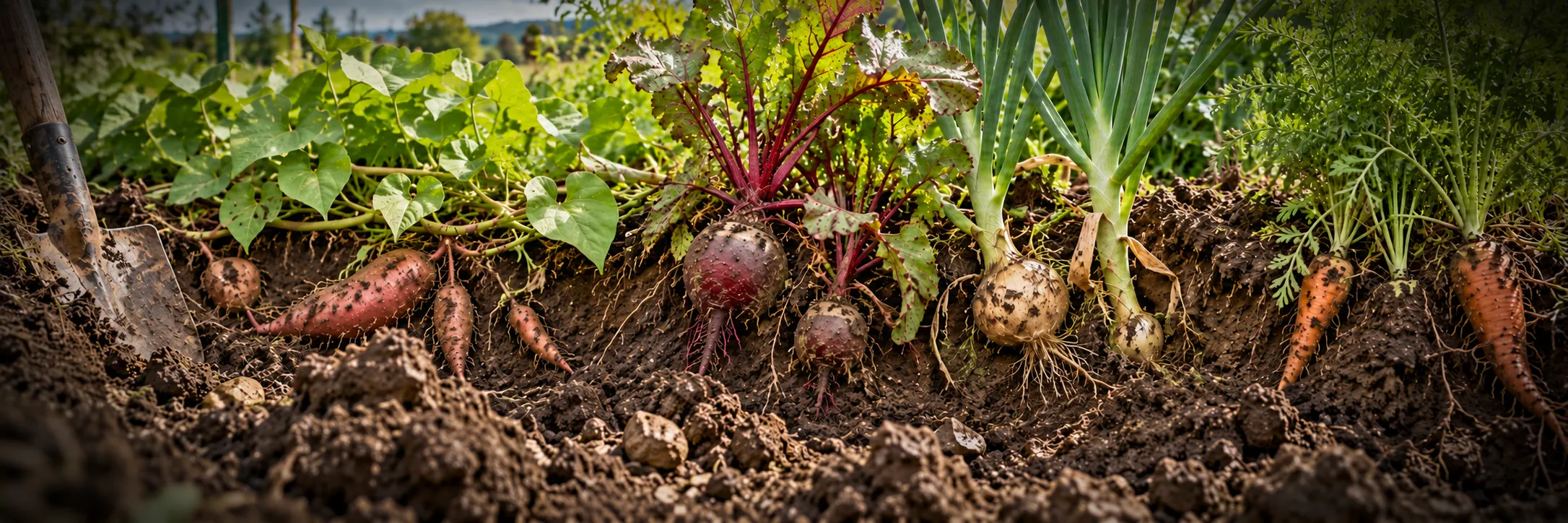
Soil Is Alive
Modern culture often treats soil as little more than dirt — an inert material used to hold plants upright.
But healthy soil is alive.
A single teaspoon of living soil may contain:
- billions of microorganisms
- fungi
- bacteria
- protozoa
- nematodes
- minerals
- organic matter
- and intricate networks of biological communication
Within healthy ecosystems, these organisms continuously interact through:
- decomposition
- nutrient exchange
- microbial signaling
- moisture regulation
- and symbiotic relationships with plants and roots
Nature operates through cooperation and communication.
The soil ecosystem is no exception.
The Hidden World Beneath Our Feet
Plants do not simply absorb nutrients passively from the ground.
Healthy soil functions as a dynamic living network where microorganisms help:
- break down organic matter
- transport minerals
- regulate nutrients
- protect root systems
- and support biological resilience
Fungi form underground mycelial networks, and some develop relationships with plant roots that help plants obtain water and nutrients. Bacteria assist with nutrient cycling. Microorganisms continuously shape the health and vitality of the terrain.
In many ways, the soil functions as the digestive system of the Earth.
What Changed?
Over the past century, agriculture has undergone dramatic transformation.
Industrial farming practices increasingly shifted toward:
- monocropping
- synthetic fertilizers
- pesticides
- herbicides
- heavy tilling
- reduced crop diversity
- and large-scale food production focused primarily on yield and shelf life
While these systems increased production, many researchers, farmers, and regenerative agriculture advocates now question what may have been lost in the process.
When ecosystems lose diversity and resilience, imbalance often follows.
Soil may be no different.
Glyphosate & The Modern Chemical Terrain
One of the most widely discussed agricultural chemicals in modern conversation is glyphosate.
Glyphosate-based herbicides were introduced to control weeds and increase agricultural efficiency. Over time, their use became widespread throughout industrial farming systems.
Research and debate continue regarding the ecological and biological effects of agricultural chemicals. Questions include potential effects on:
- microbial diversity
- soil ecosystems
- plant resilience
- water systems
Findings vary with the chemical, dose, soil conditions, and farming system; evidence about soil microbes does not by itself establish an effect on human health. At the same time, many regenerative farmers and soil researchers emphasize that healthy ecosystems depend upon biodiversity, microbial balance, and living soil systems.
The conversation surrounding soil health is ultimately much larger than any single chemical.
It is about the relationship between humans, food, ecosystems, and the living terrain of the Earth itself.
The Soil-Human Connection
Humans evolved in constant relationship with the microbial world of the Earth.
Historically, microbes from soil naturally entered human ecosystems through:
- food
- water
- air
- farming
- gardening
- animals
- and direct contact with the land
Modern sanitation, changes in agriculture and food systems, and indoor lifestyles have altered that relationship.
Some researchers now explore whether reduced microbial diversity within the environment may also influence microbial diversity within the human terrain.
The body is not separate from nature.
It is nature.
Fear vs Restoration
The goal is not to romanticize the past or fear modern life.
Human innovation has brought many benefits to civilization.
But perhaps part of the future of health involves remembering that humans are biological beings deeply connected to living ecosystems.
Nature functions through:
- diversity
- resilience
- relationship
- adaptation
- and balance
When those relationships weaken, imbalance may emerge both externally and internally.
The solution may not lie in fear.
Perhaps it lies in restoration.
Supporting the Terrain
Supporting the terrain of both the Earth and the human body may involve:
- regenerating soil ecosystems
- growing nutrient-dense food
- reducing unnecessary chemical burden
- supporting microbial diversity
- spending time in nature
- consuming whole foods
- restoring biodiversity
- and rebuilding relationship with the natural world
We believe that the future of health begins with restoring the ecosystems that sustain life itself. Because perhaps the future of human health begins beneath our feet.
Final Reflection
Healthy civilizations cannot exist without healthy ecosystems.
The condition of the soil influences the plants. The plants influence the food. The food influences the body. And the body influences the future of humanity itself.
Everything in nature exists in relationship.
Perhaps one of the most important questions of our time is not simply how we feed the world — but how we restore the living systems that make life possible in the first place.
Sources
- USDA NRCS — Soil Health. Living soil and conservation principles.
Read source - USDA NRCS — Soil Health Glossary. Mycorrhizal relationships with plant roots.
Read source - Kepler et al. (2020) — Soil Microbial Communities in Diverse Agroecosystems Exposed to the Herbicide Glyphosate. Context-specific field research.
Read source - Roslund et al. (2020) — Biodiversity intervention enhances immune regulation and health-associated commensal microbiota among daycare children. Environmental exposure study; not evidence that soil contact treats disease.
Read source